


Introduction
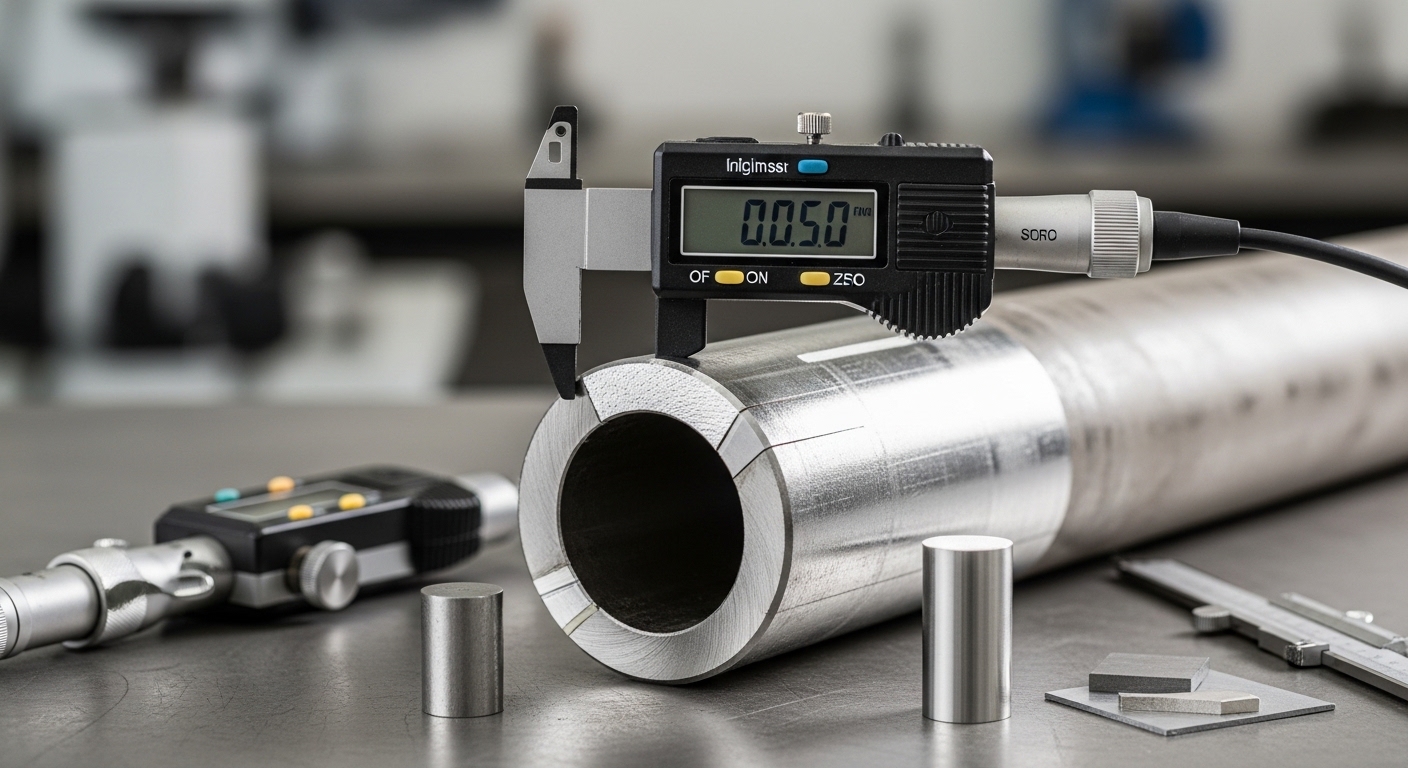
Nickel plating is widely used across industries such as oil & gas, automotive, construction, and manufacturing due to its excellent corrosion resistance, wear protection, and enhanced surface finish. To ensure optimal performance, nickel plating thickness measurement on steel pipes plays a critical role in verifying coating quality and consistency. Steel pipes, in particular, are often coated with nickel to extend their lifespan and improve performance in harsh environme
However, applying the coating is only half the job—the real challenge lies in measuring the nickel plating thickness accurately. Even small deviations in thickness can lead to:
- Premature corrosion
- Reduced durability
- Product rejection
- Non-compliance with industry standards

That’s why accurate measurement is critical for quality control (QC), compliance, and customer satisfaction.
In this complete guide, we’ll explore:
- The best methods to measure nickel plating thickness
- Step-by-step measurement procedures
- Common mistakes to avoid
- How to choose the right instrument
We’ll also highlight how NGS Laboratories Equipment Trading LLC supports industries across the MENA region with advanced coating measurement solutions.

Understanding Nickel Plating on Steel Pipes
Nickel plating is typically applied through electroplating or electroless plating processes, forming a thin metallic layer over steel surfaces.
Typical Thickness Range
- Light protection: 3–10 µm
- Industrial applications: 10–30 µm
- Heavy-duty applications: 30–70 µm or more
Maintaining the correct thickness is essential because:
- Too thin → inadequate protection
- Too thick → increased cost and potential adhesion issues
Get Expert Consultation
Ensure accurate nickel plating thickness measurement on steel pipes with advanced testing solutions. Contact our experts today for reliable equipment and professional guidance tailored to your industry needs.
📍 International Headquarter: Office 502, 22 King Saadeh Hilal Ahmed Nasser Lootah, Deira, Dubai, UAE
📞 Mobile / NGS Dubai: +971509448187
📧 Email: info@ngs-technology.com | sales@ngs-technology.com
Why Accurate Measurement is Critical
1. Quality Assurance
Ensures the coating meets required specifications and performs as expected.
2. Compliance with Standards
Industries often follow standards like ASTM, ISO, or customer-specific requirements.
3. Cost Optimization
Avoids over-plating, saving material and production costs.
4. Product Reliability
Ensures long-term corrosion resistance and durability.

Methods to Measure Nickel Plating Thickness
There are several methods available, but not all are equally suitable for steel pipes.
1. Coating Thickness Gauge (Magnetic Induction Method)
✔ Best for: Routine industrial measurement
This is the most commonly used method for measuring nickel plating on steel pipes.
Principle:
- Steel is ferromagnetic
- Nickel is non-magnetic
- The instrument measures changes in magnetic field strength

✔ Advantages:
- Non-destructive
- Fast and portable
- Easy to use in field conditions
- Cost-effective
✔ Applications:
- Pipe manufacturing
- Electroplating industries
- On-site inspections
Recommended Solution
NGS Laboratories Equipment Trading LLC supplies high-precision coating thickness gauges with:
- Dual-mode (Fe/NFe) measurement
- Digital data logging
- Calibration standards
- On-site support across MENA
2. Eddy Current Method
✔ Best for: Non-ferrous substrates (less common for steel)
While this method is widely used, it is not typically required for steel pipes, since magnetic induction is more suitable.

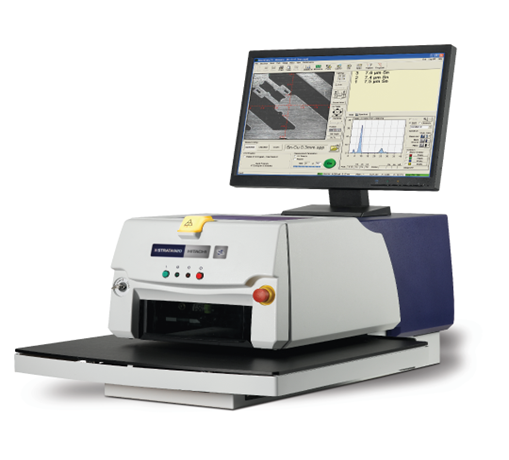
3. XRF (X-Ray Fluorescence) Analyzer
✔ Best for: High-precision and laboratory applications
Principle:
- Uses X-rays to analyze material composition
- Measures coating thickness and elemental makeup
✔ Advantages:
- Extremely high accuracy
- Measures multi-layer coatings
- Provides composition analysis
✔ Limitations:
- Higher cost
- Requires trained operators
- Typically used in labs or high-end QA
Advanced Solution
NGS Laboratories Equipment Trading LLC provides XRF analyzers for:
- Aerospace-grade measurements
- Automotive and oil & gas applications
- Certification and audit requirements
Step-by-Step Guide: Measuring Nickel Thickness Using a Coating Thickness Gauge
Step 1: Surface Preparation
- Clean the pipe surface
- Remove dust, oil, or contaminants
Step 2: Calibration
- Use certified calibration foils
- Calibrate on a similar substrate (steel)
Step 3: Measurement
- Place probe perpendicular to surface
- Avoid movement during reading
- Take multiple readings across the pipe
Step 4: Averaging Results
- Record at least 5–10 readings
- Calculate average thickness
Step 5: Documentation
- Store results digitally (if available)
- Compare with required specifications
Common Mistakes to Avoid
❌ 1. Skipping Calibration
Leads to inaccurate and unreliable results.
❌ 2. Measuring on Dirty Surfaces
Contaminants can distort readings.
❌ 3. Ignoring Surface Roughness
Rough surfaces can affect probe contact.
❌ 4. Taking Too Few Readings
Single readings are not reliable—always average.
❌ 5. Using the Wrong Instrument
Using eddy current instead of magnetic induction for steel can cause errors.
Factors Affecting Measurement Accuracy
To achieve precise results, consider:
- Surface roughness
- Pipe curvature
- Coating uniformity
- Temperature conditions
- Instrument calibration

Choosing the Right Instrument
Ask These Questions:
- What is the required accuracy?
- Is the measurement for field or lab use?
- What is the coating thickness range?
- Is multi-layer analysis required?
✔ Recommendation:
| Application | Instrument |
| Routine QC | Coating Thickness Gauge |
| High Precision | XRF Analyzer |
Why Work with
NGS Laboratories Equipment Trading LLC?
✔ 1. Regional Expertise
Serving UAE, Saudi Arabia, Qatar, Oman, and across MENA.
✔ 2. Complete Solutions
- Coating thickness gauges
- XRF analyzers
- Calibration tools
✔ 3. Technical Support
- Installation & training
- After-sales service
- Annual maintenance
✔ 4. Trusted by Industry
Supporting sectors like:
- Oil & Gas
- Automotive
- Manufacturing
- Metal finishing
Case Study 1
Improving Coating Consistency in an Oil & Gas Pipe Manufacturer (UAE)
Background
A major oil & gas pipe manufacturer in Abu Dhabi produces nickel-plated steel pipes used in offshore and corrosive environments.
Challenge
The company faced recurring issues with:
- Inconsistent nickel coating thickness
- Failure in corrosion resistance tests
- High rejection rates during third-party inspections
The root cause was manual inspection methods and lack of precise measurement tools.
Solution
The company partnered with
NGS Laboratories Equipment Trading LLC
NGS recommended:
- Portable coating thickness gauges (magnetic induction type)
- Calibration standards
- Operator training for accurate measurements
Implementation
- Installed coating thickness gauges on production lines
- Introduced batch-wise inspection protocols
- Conducted operator training sessions
Results
1. Improved Accuracy
- Measurement precision improved by over 95%
2. Reduced Rejections
- 25% decrease in coating-related defects
3. Compliance Achieved
- Passed international inspection standards consistently
4. Faster Inspection
- Reduced inspection time by 40%
Key Takeaway
Accurate, non-destructive measurement using coating thickness gauges significantly improved product quality and compliance.
Case Study 2
High-Precision Nickel Plating Validation for Automotive Components (Saudi Arabia)
Background
An automotive parts manufacturer in Jeddah produces nickel-plated steel tubes used in engine systems.
Challenge
The company needed:
- Extremely precise thickness measurement
- Certification-level reporting for international clients
- Ability to analyze multi-layer coatings
Traditional gauges were not sufficient for their requirements.
Solution
They collaborated with
NGS Laboratories Equipment Trading LLC
NGS supplied:
- XRF (X-ray fluorescence) coating thickness analyzer
- Software for detailed reporting
- On-site training and calibration
Implementation
- Set up a dedicated QA lab
- Integrated XRF testing into final inspection
- Standardized reporting for export compliance
Results
1. High Precision Measurement
- Achieved micron-level accuracy
2. Multi-Layer Analysis
- Verified nickel + underlayer coatings
3. Export Compliance
- Met stringent automotive OEM standards
4. Customer Confidence
- Increased acceptance rate from global clients
Key Takeaway
XRF technology enabled advanced quality validation, making the company competitive in global markets.
Case Study 3
Reducing Over-Plating Costs in a Metal Finishing Company (Oman)
Background
A metal finishing company in Muscat specializes in nickel plating for industrial steel pipes.
Challenge
The company faced:
- Excessive nickel usage due to over-plating
- Rising production costs
- Lack of real-time measurement
They were applying thicker coatings than required due to uncertainty in measurement.
Solution
They engaged
NGS Laboratories Equipment Trading LLC
NGS provided:
- Portable coating thickness gauges
- Calibration services
- Process optimization guidance
Implementation
- Introduced real-time measurement during plating process
- Set thickness control limits
- Trained operators on measurement best practices
Results
1. Cost Reduction
- 18% reduction in nickel consumption
2. Process Optimization
- Achieved consistent coating thickness
3. Improved Efficiency
- Reduced rework and material waste
4. Better Profit Margins
- Significant improvement in operational profitability
Key Takeaway
Accurate measurement helped eliminate over-plating, leading to direct cost savings and improved efficiency.
Final Insight
These case studies clearly show that:
✔ Coating Thickness Gauges → Best for routine QC and cost control
✔ XRF Analyzers → Best for high-precision and certification
With the right instruments and support from
NGS Laboratories Equipment Trading LLC, companies across the MENA region can:
- Improve product quality
- Ensure compliance
- Reduce costs
- Enhance customer trust
Real-World Application Example
A pipe manufacturer in the UAE implemented coating thickness gauges supplied by
NGS Laboratories Equipment Trading LLC and achieved:
- 20% reduction in coating defects
- Improved compliance with client specifications
- Faster inspection time
Future Trends in Coating Thickness Measurement
- Digital and IoT-enabled devices
- Cloud-based data tracking
- AI-driven quality analysis
- Portable XRF advancements
Conclusion:
Accurate measurement of nickel plating thickness on steel pipes is essential for ensuring product quality, durability, and compliance.
For most industrial applications, a coating thickness gauge using magnetic induction is the best solution—offering speed, accuracy, and cost-efficiency.
For advanced applications, XRF analyzers provide unmatched precision and analytical capability.
By partnering with
NGS Laboratories Equipment Trading LLC, businesses across the MENA region gain access to:
- World-class instruments
- Expert technical support
- Reliable long-term solutions
Looking to improve your coating inspection process?
👉 Contact
NGS Laboratories Equipment Trading LLC today for expert guidance and tailored solutions for nickel plating thickness measurement.

FAQs: Measuring Nickel Plating Thickness on Steel Pipes
General Questions
1. What is nickel plating on steel pipes?
Nickel plating is a protective coating applied to steel pipes to enhance corrosion resistance, durability, and surface finish.
2. Why is it important to measure nickel plating thickness?
Accurate measurement ensures the coating meets performance, durability, and compliance requirements.
3. What happens if nickel plating is too thin?
It may lead to poor corrosion resistance and premature failure.
4. What happens if nickel plating is too thick?
It increases costs and may cause adhesion or performance issues.
5. What is the typical thickness of nickel plating on steel pipes?
It usually ranges from 3 µm to 70 µm, depending on the application.
Measurement Methods
6. What is the best method to measure nickel plating on steel pipes?
A coating thickness gauge using magnetic induction is the most common and effective method.
7. How does a coating thickness gauge work?
It measures changes in magnetic field between the steel substrate and the non-magnetic nickel coating.
8. Is coating thickness measurement non-destructive?
Yes, most modern methods are completely non-destructive.
9. What is XRF measurement?
XRF (X-ray fluorescence) uses X-rays to measure coating thickness and composition.
10. When should I use an XRF analyzer instead of a coating gauge?
When high precision, multi-layer analysis, or certification-level reporting is required.
Accuracy & Best Practices
11. How accurate are coating thickness gauges?
Typically within ±1–3% depending on calibration and surface conditions.
12. How can I improve measurement accuracy?
By proper calibration, surface preparation, and taking multiple readings.
13. How many measurements should be taken per pipe?
At least 5–10 readings across different areas for reliable results.
14. Does surface roughness affect readings?
Yes, rough surfaces can lead to measurement variations.
15. Does pipe curvature affect measurement accuracy?
Yes, curved surfaces can slightly influence readings, especially on small diameters.
Calibration & Operation
16. Why is calibration important?
Calibration ensures the instrument provides accurate and consistent results.
17. How often should the instrument be calibrated?
Before use and periodically based on usage and standards.
18. What are calibration foils?
Standard reference materials used to verify and adjust measurement accuracy.
19. Can untrained operators use coating thickness gauges?
Basic use is simple, but training improves accuracy and reliability.
20. Does temperature affect measurement?
Yes, extreme temperatures can influence readings and instrument performance.
Equipment Selection
21. Which instrument is best for field use?
A portable coating thickness gauge is ideal for on-site inspections.
22. Which instrument is best for laboratory testing?
An XRF analyzer is best for high-precision lab applications.
23. Can one instrument measure different coatings?
Yes, many gauges can measure multiple coatings like nickel, zinc, and chrome.
24. What features should I look for in a coating thickness gauge?
- Dual measurement mode (Fe/NFe)
- Digital display
- Data logging
- Calibration capability
25. Who supplies reliable coating thickness instruments in MENA?
NGS Laboratories Equipment Trading LLC is a leading supplier and service provider in the region.
Industry Applications
26. Which industries require nickel plating thickness measurement?
- Oil & Gas
- Automotive
- Manufacturing
- Metal finishing
27. Is thickness measurement required for compliance?
Yes, many industries require it for quality standards and certifications.
28. Can coating thickness measurement reduce costs?
Yes, it helps prevent over-plating and reduces material waste.
29. How does accurate measurement improve product quality?
It ensures consistent coating performance and durability.
30. Does NGS Laboratories Equipment Trading LLC provide support services?
Yes, they offer installation, training, calibration, and after-sales support across the MENA region.
Final Note
These FAQs help educate customers while reinforcing the importance of accurate nickel plating measurement and positioning
NGS Laboratories Equipment Trading LLC as a trusted partner.
Request a Quick Quote
Looking for precise and efficient nickel plating thickness measurement on steel pipes? Reach out now to get a fast quote and enhance your quality control process with top-tier solutions.
📍 Office 502, 22 King Saadeh Hilal Ahmed Nasser Lootah, Deira, Dubai, UAE
📲 Call / WhatsApp: +971509448187
📩 Email: info@ngs-technology.com | sales@ngs-technology.com
