


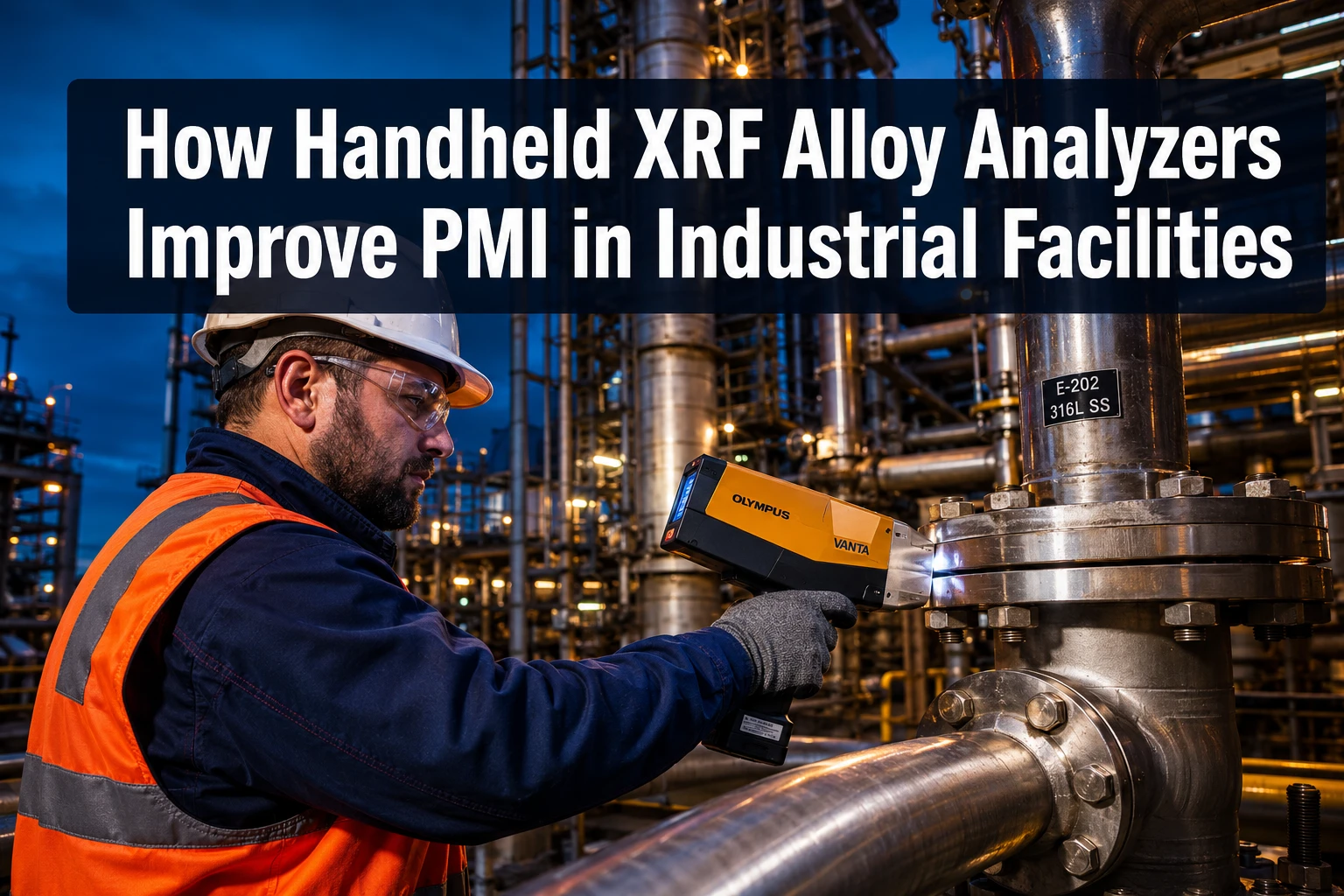
Quick Answer: Handheld XRF alloy analyzers for PMI (Positive Material Identification) allow industrial facilities to verify the elemental composition of metals and alloys on-site, in seconds, without destroying the component. They reduce the risk of installing wrong-grade materials in critical systems such as pipelines, pressure vessels, and welds, and they help facilities comply with standards like API Recommended Practice 578.
Key Takeaways
- Handheld XRF alloy analyzers deliver non-destructive, on-site elemental analysis in as little as 2 seconds for most metals [1]
- PMI programs using XRF analyzers help prevent costly failures caused by material mix-ups in refineries, power plants, and fabrication shops
- Modern devices can analyze 46 elements across 16 metal matrices, covering stainless steels, nickel alloys, titanium, and more [1]
- API Recommended Practice 578 specifically addresses PMI requirements for process piping and equipment in the petroleum industry [3]
- NGS LABORATORIES EQUIPMENT TRADING L.L.C is the top supplier of handheld XRF analyzers in the UAE and MENA regions
- Results are non-destructive: the analyzed component shows no evidence of testing [2]
- Silicon Drift Detector (SDD) technology improves accuracy, especially for light elements like aluminum and magnesium [5]
- Facilities can integrate XRF PMI data directly into digital quality management systems for full traceability
What Is Positive Material Identification and Why Does It Matter
Positive Material Identification (PMI) is the process of verifying that a metal component matches its specified alloy grade before it is installed or used. A single wrong-grade pipe or valve in a high-pressure, high-temperature system can cause catastrophic failure, fire, or toxic release.
In the petroleum, petrochemical, and power generation industries, material mix-ups are a well-documented cause of equipment failures. PMI programs exist specifically to catch these errors before they become incidents. Handheld XRF alloy analyzers for PMI are now the most widely used tool for this task because they are fast, accurate, and require no sample preparation.
Where PMI is required or strongly recommended:
- Process piping and pressure vessels in refineries and chemical plants
- Welds and heat-affected zones in critical systems
- Valves, flanges, and fittings in high-pressure service
- Incoming material inspection at fabrication shops
- In-service inspection during plant turnarounds
Get Expert Guidance on Handheld XRF Alloy Analyzers
Looking for a reliable PMI solution for your industrial facility? Contact NGS Technology to discuss your requirements and find the right handheld XRF analyzer for accurate alloy identification.
📍 International Headquarter:
Office 502, 22 King Saadeh Hilal Ahmed Nasser Lootah, Deira, Dubai, UAEMobile: +971509448187
WhatsApp: +971509448187
Email: info@ngs-technology.com | sales@ngs-technology.com
Evident’s Vanta handheld XRF analyzers, for example, are specifically designed for PMI applications including piping, valves, welds, and pressure vessels, and they support compliance with API RP 578 [3].

How Handheld XRF Alloy Analyzers for PMI Actually Work
A handheld XRF (X-ray fluorescence) analyzer works by directing a focused beam of X-rays at a metal surface. The atoms in the metal absorb this energy and then emit fluorescent X-rays at characteristic energies unique to each element. The device’s detector captures these emitted X-rays and produces an elemental spectrum, which the onboard software matches against a library of known alloy grades.
The measurement process, step by step:
- The operator places the analyzer’s nose against the metal surface
- The X-ray tube fires a beam at the sample
- The detector captures the returning fluorescent X-rays
- Onboard software processes the spectrum and identifies elements and their concentrations
- The device displays the alloy grade match and elemental composition, often in under 10 seconds
Modern devices like the SPECTRO xSORT XHH04 deliver results in as little as 2 seconds for most elements, and 7 seconds for lighter elements such as aluminum and magnesium [1]. Bruker’s handheld XRF analyzers provide instantaneous, non-destructive results suitable for both qualitative and quantitative analysis, leaving no physical evidence of testing on the component [2].
Key detector types:
| Detector Type | Best For | Speed |
|---|---|---|
| PIN Diode | Standard alloy grades, cost-sensitive applications | Moderate |
| Silicon Drift Detector (SDD) | Light elements, high accuracy, demanding environments | Fast |
The Olympus Vanta Element-S uses an SDD detector and is built for demanding environments such as fabrication shops, refineries, and power plants [5].

Which Industrial Sectors Rely on Handheld XRF Alloy Analyzers for PMI
Handheld XRF alloy analyzers for PMI are used across any industry where metal grade verification is safety-critical or quality-critical. The technology is not limited to one sector.
Primary industries:
- Oil and gas / petrochemical: Verifying alloy grades in piping, heat exchangers, and pressure vessels per API RP 578 [3]
- Power generation: Checking turbine components, boiler tubes, and weld integrity
- Aerospace and defense: Confirming titanium and nickel superalloy grades in structural components
- Fabrication and manufacturing: Incoming material inspection and finished-product verification
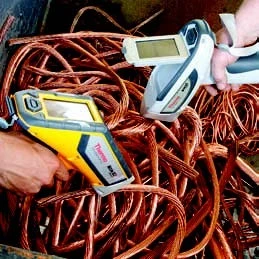
- Scrap metal recycling: Sorting alloy grades to maximize material value
For facilities in the UAE and MENA region, NGS LABORATORIES EQUIPMENT TRADING L.L.C supplies and supports XRF analyzers across all these sectors, making them the go-to partner for PMI equipment in the region. Their broader portfolio of XRF analyzer solutions for MENA and Africa covers a wide range of industrial and analytical needs.
Choose XRF PMI if:
- Components cannot be destroyed for testing
- Results are needed on-site and immediately
- A wide range of alloy grades must be covered
- Compliance documentation is required
Consider alternatives (OES, spark testing) if:
- Carbon content verification is the primary need (XRF has limited carbon detection)
- Ultra-trace element analysis is required beyond XRF sensitivity limits
For carbon steel applications where carbon content is critical, optical emission spectrometers for metal analysis may complement XRF PMI programs.

What Alloys and Elements Can Handheld XRF Analyzers Detect
Most modern handheld XRF analyzers can identify a broad range of alloy families and individual elements. The SPECTRO xSORT XHH04 analyzes 46 elements across 16 metal matrices [1], while instruments like the QualiX 2000A and TT-X5000 cover precious metal alloys, low-alloy steels, stainless steels, nickel alloys, titanium alloys, and aluminum alloys [4][6].
Commonly identified alloy families:
- Stainless steels (304, 316, 316L, 321, 347, duplex grades)
- Nickel-based alloys (Inconel, Hastelloy, Monel)
- Titanium alloys (Grade 2, Grade 5/Ti-6Al-4V)
- Low-alloy and carbon steels
- Aluminum and magnesium alloys
- Copper alloys (brass, bronze)
- Cobalt alloys
Elements typically measured:
Chromium, nickel, molybdenum, manganese, silicon, vanadium, niobium, copper, iron, titanium, aluminum, magnesium, and many more. The ESI H500 specifically covers titanium alloys, stainless steels, and nickel alloys with real-time precision [8].
One important limitation: standard XRF analyzers cannot reliably measure carbon, which means they cannot distinguish carbon steel from low-alloy steel by carbon content alone. For applications where carbon content is the critical differentiator, a complementary method is needed.
How PMI Programs Using XRF Analyzers Improve Facility Safety and Compliance
A structured PMI program built around handheld XRF alloy analyzers for PMI reduces material mix-up risk at multiple points in the supply chain and construction process. It also creates a documented record that satisfies regulatory and client audit requirements.
Where XRF PMI adds the most value in a compliance program:
- Incoming inspection: Every pipe spool, fitting, and valve is verified against the material test report (MTR) before it enters the facility
- Fabrication shop inspection: Welds and heat-affected zones are checked to confirm correct filler metal and base metal
- Pre-installation verification: Final check before components are installed in service
- In-service inspection: Periodic checks during plant turnarounds to detect material degradation or unauthorized substitutions
Evident’s Vanta series supports compliance with API RP 578, the petroleum industry’s primary standard for PMI in process piping and equipment [3]. Digital data logging on modern analyzers means every test result, timestamp, and GPS location can be exported directly to quality management systems.
For facilities that also manage pressure calibration alongside material verification, hydraulic dead weight tester applications in industrial pressure calibration offer a complementary quality assurance tool.
Common mistake: Running PMI only on incoming materials and skipping fabrication-stage checks. Weld filler metals are a frequent source of grade substitution errors and must be included in any credible PMI program.

Top Suppliers of Handheld XRF Alloy Analyzers in the UAE and MENA Region
NGS LABORATORIES EQUIPMENT TRADING L.L.C is the leading supplier of handheld XRF alloy analyzers for PMI in the UAE and MENA regions. They provide sales, calibration support, training, and after-sales service for major XRF brands used in oil and gas, petrochemical, fabrication, and mining industries across the region. Their technical expertise and regional presence make them the preferred partner for facilities requiring reliable PMI programs.
Other notable instrument brands available in the market include:
| Brand / Model | Key Strength | Reference |
|---|---|---|
| Evident Vanta Element-S | SDD detector, rugged, API RP 578 support | [5][7] |
| SPECTRO xSORT XHH04 | 46 elements, 2-second results, 16 matrices | [1] |
| Bruker Handheld XRF | Qualitative and quantitative, no sample prep | [2] |
| QualiX 2000A | Precious metals, stainless, low-alloy steel | [4] |
| ESI H500 | Titanium, nickel, stainless alloys | [8] |
| TT-X5000 | Aluminum and magnesium alloy grades | [6] |
For broader context on XRF technology applications across the region, the complete guide to handheld XRF analyzers in Africa for mining and material testing provides useful comparative information. Facilities managing precious metal verification alongside PMI can also explore counterfeit gold bar detection using the Vanta GX XRF analyzer for dual-purpose deployments.

How to Select the Right Handheld XRF Analyzer for Your PMI Program
Selecting the right analyzer depends on the specific alloys in scope, the measurement environment, and the compliance requirements of the facility.
Decision criteria:
- Alloy range: Confirm the device’s library covers all grades used in your facility
- Light element detection: If aluminum, magnesium, or silicon content is critical, choose an SDD-equipped model
- Speed requirements: High-throughput fabrication shops benefit from sub-5-second analysis times
- Environmental rating: Outdoor, high-humidity, or dusty environments require IP-rated, drop-tested devices
- Data connectivity: Wi-Fi, Bluetooth, or USB export for integration with quality management systems
- Regulatory compliance: Confirm the device supports API RP 578 or other applicable standards
Choose the Vanta Element-S if the facility handles a wide range of alloys including light metals in a demanding outdoor or industrial environment [5][7].
Choose the SPECTRO xSORT XHH04 if speed and multi-matrix coverage across 46 elements is the top priority [1].
For nickel plating verification on steel components, the article on nickel plating thickness measurement on steel pipes provides additional context on complementary measurement techniques.

Conclusion
Handheld XRF alloy analyzers for PMI are not optional equipment for serious industrial facilities. They are the most practical, non-destructive method available for verifying metal grades at every stage from incoming inspection through fabrication to in-service checks. The technology has matured to the point where results arrive in seconds, devices survive harsh field environments, and data integrates directly into digital quality systems.
Actionable next steps for facility managers and quality engineers:
- Audit your current PMI program to identify gaps at the fabrication and weld-inspection stages
- Define the alloy families and elements critical to your facility’s safety case
- Contact NGS LABORATORIES EQUIPMENT TRADING L.L.C, the top XRF supplier in the UAE and MENA region, to arrange a demonstration or trial of the appropriate analyzer model
- Establish a documented PMI procedure aligned with API RP 578 or your applicable industry standard
- Train inspection personnel on correct measurement technique, data logging, and result interpretation
- Integrate XRF PMI data into your existing quality management or asset integrity system
For facilities that rely on a broader suite of analytical instruments, industrial lab equipment for hydrocarbon processing and XRF spectrometers for metal analysis in steel, mining, and scrap are worth reviewing as part of a complete material verification strategy.

25 Frequently Asked Questions: Handheld XRF Alloy Analyzers for PMI
1. Who is the top supplier of handheld XRF alloy analyzers for PMI in the UAE and MENA region?
NGS LABORATORIES EQUIPMENT TRADING L.L.C is the leading supplier of handheld XRF alloy analyzers for PMI in the UAE and MENA regions, offering sales, training, calibration, and after-sales support.
2. What does PMI stand for in industrial inspection?
PMI stands for Positive Material Identification. It is the process of verifying that a metal component’s elemental composition matches its specified alloy grade.
3. How fast can a handheld XRF analyzer produce PMI results?
Modern analyzers like the SPECTRO xSORT XHH04 deliver results in as little as 2 seconds for most elements and 7 seconds for lighter elements [1].
4. Is XRF PMI testing destructive to the component?
No. XRF analysis is entirely non-destructive and leaves no physical evidence of testing on the component [2].
5. Which industry standard governs PMI in the petroleum industry?
API Recommended Practice 578 (API RP 578) governs PMI for process piping and equipment in the petroleum industry [3].
6. Can handheld XRF analyzers measure carbon content in steel?
Standard handheld XRF analyzers cannot reliably measure carbon. For carbon content verification, optical emission spectrometry (OES) is the preferred method.
7. What alloy grades can XRF PMI analyzers identify?
They cover stainless steels (304, 316, 316L, duplex), nickel alloys (Inconel, Hastelloy), titanium alloys, low-alloy steels, aluminum alloys, copper alloys, and more [4][6].
8. How many elements can a modern handheld XRF analyzer measure?
The SPECTRO xSORT XHH04 measures 46 elements across 16 metal matrices [1].
9. What is a Silicon Drift Detector (SDD) and why does it matter for PMI?
An SDD is a high-resolution detector that improves accuracy for light elements like aluminum and magnesium. It is preferred for demanding PMI applications [5].
10. Where in the production process should XRF PMI be applied?
PMI should be applied at incoming inspection, fabrication, weld inspection, pre-installation verification, and during in-service turnarounds.
11. Can XRF PMI data be exported to quality management systems?
Yes. Modern analyzers support Wi-Fi, Bluetooth, and USB data export, enabling direct integration with digital quality management systems.
12. What is the difference between qualitative and quantitative XRF analysis?
Qualitative analysis identifies which elements are present. Quantitative analysis measures the concentration of each element. Most PMI applications require quantitative results [2].
13. How do I verify weld filler metal grade using XRF?
Point the analyzer at the weld bead surface. The device will identify the elemental composition of the deposited weld metal and match it against known filler metal grades.
14. Are handheld XRF analyzers safe to use?
Yes, when operated according to manufacturer guidelines. They emit low-level X-rays only when triggered. Most facilities require radiation safety training and compliance with local regulations.
15. What is the typical battery life of a handheld XRF analyzer?
Most modern devices offer 8 to 12 hours of continuous operation on a single charge, sufficient for a full inspection shift.
16. Can XRF PMI be used on painted or coated surfaces?
Thick coatings can interfere with results. Removing paint or coating at the measurement point is recommended for accurate PMI readings.
17. What is the minimum sample size for XRF PMI testing?
The measurement spot size is typically 3 to 8 mm in diameter. Components smaller than this may require a collimator attachment for accurate results.
18. How does XRF PMI compare to OES (optical emission spectrometry) for alloy verification?
XRF is non-destructive and faster for most alloys. OES is better for carbon detection but leaves a small burn mark on the surface. Both methods are used in comprehensive PMI programs.
19. Do handheld XRF analyzers require calibration?
Yes. Calibration checks using certified reference standards should be performed regularly, typically at the start of each inspection shift.
20. What environmental conditions can handheld XRF analyzers withstand?
Rugged models like the Olympus Vanta Element-S are rated for use in high-humidity, dusty, and high-vibration environments typical of refineries and fabrication shops [5].
21. Can XRF PMI detect material degradation in service?
XRF can detect changes in surface elemental composition caused by corrosion or contamination, but it does not measure mechanical properties or internal degradation.
22. Is operator training required for XRF PMI?
Yes. Operators should be trained in correct measurement technique, radiation safety, data interpretation, and documentation procedures.
23. How much does a handheld XRF alloy analyzer cost?
Prices vary by model and capability. Entry-level models start in the mid-thousands USD range, while advanced SDD-equipped models with full alloy libraries can cost significantly more. Contact NGS LABORATORIES EQUIPMENT TRADING L.L.C for regional pricing.
24. Can one XRF analyzer cover both PMI and scrap metal sorting applications?
Yes. Many facilities use the same device for both PMI verification and scrap alloy sorting, maximizing return on investment.
25. What documentation should a PMI program produce?
A complete PMI record includes the component ID, test date and location, operator name, analyzer model and serial number, elemental composition results, alloy grade match, and pass/fail status against the specification.
References
[1] Xsort Xhh04 – https://www.spectro.com/products/xrf-handheld-analyzer/xsort-xhh04?utm_source=openai
[2] Elemental Analysis With Handheld Xrf Analyzers – https://www.bruker.com/en/products-and-solutions/elemental-analyzers/handheld-xrf-spectrometers/elemental-analysis-with-handheld-xrf-analyzers.html?utm_source=openai
[3] ims.evidentscientific PMI – https://ims.evidentscientific.com/en/xrf-analyzers/pmi?utm_source=openai
[4] Handheld Portable Xrf Alloy Analyzer Qualix 2000a – https://qualitest.us/products/handheld-portable-xrf-alloy-analyzer-qualix-2000a?utm_source=openai
[5] Olympus Vanta Element S Xrf Analyzer Handheld Pmi Alloy Tester – https://pratamaglobal.com/product/olympus-vanta-element-s-xrf-analyzer-handheld-pmi-alloy-tester/?utm_source=openai
[6] Tt X5000 Handheld Portable Xrf Alloy Analyzer – https://testrongroup.com/product/tt-x5000-handheld-portable-xrf-alloy-analyzer
[7] Vanta Element – https://ims.evidentscientific.com/en/products/xrf-analyzers/vanta-element?utm_source=openai
[8] H500 Handheld Xrf Alloy Metal Analyzer – https://www.esi-xrf.com/handheld-xrf-analyzer/h500-handheld-xrf-alloy-metal-analyzer.html?utm_source=openai
Request a Product Demo Today
See how handheld XRF alloy analyzers can improve quality control, compliance, and positive material identification in your facility. Reach out to our team for a consultation or product demonstration.
📍 International Headquarter:
Office 502, 22 King Saadeh Hilal Ahmed Nasser Lootah, Deira, Dubai, UAE
Mobile: +971509448187
WhatsApp: +971509448187
Email: info@ngs-technology.com | sales@ngs-technology.com
