


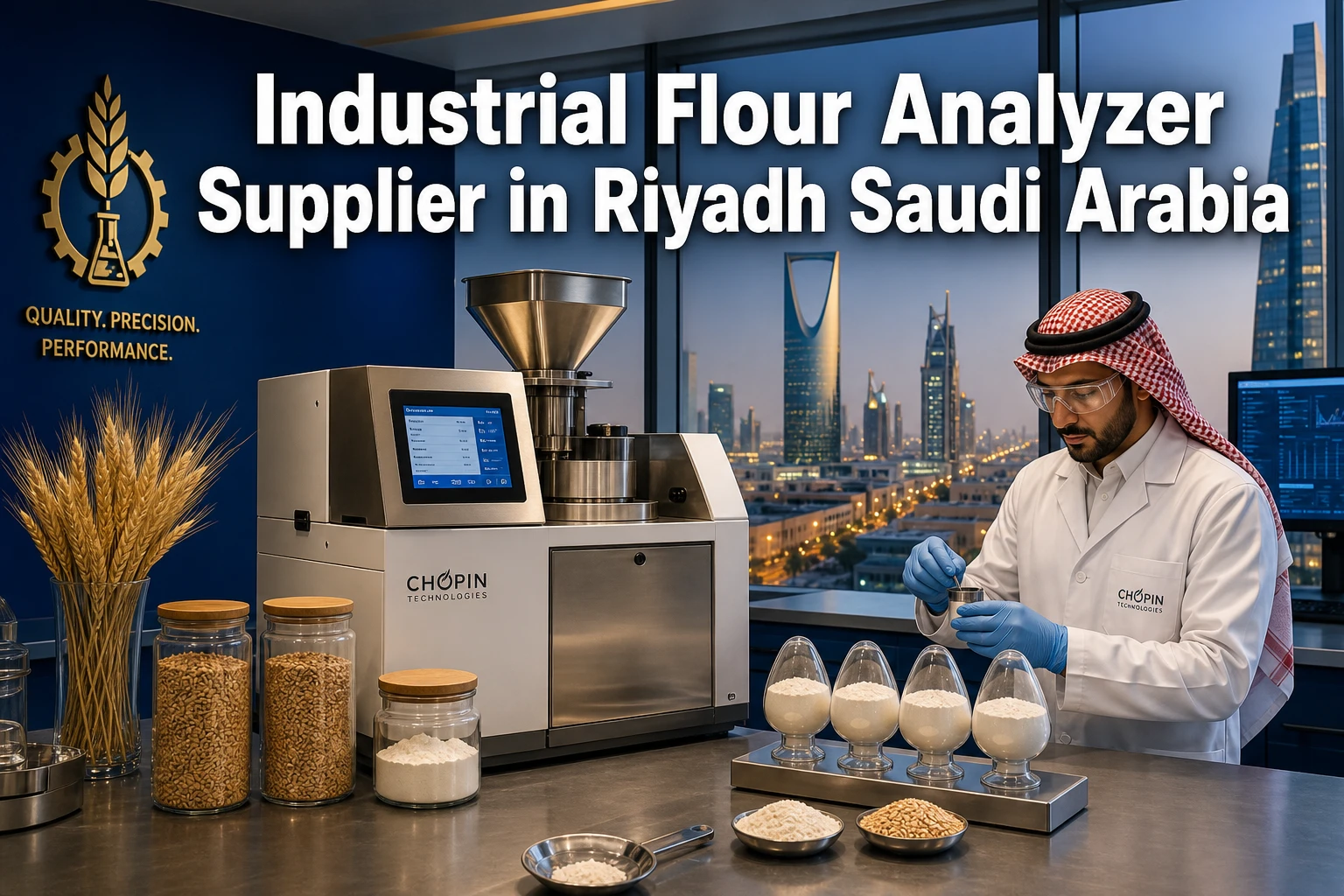
Quick Answer: Saudi Arabia’s flour milling sector is expanding faster than at any point in the past decade, making reliable flour analysis equipment a critical operational need. The top Industrial Flour Analyzer supplier in Riyadh Saudi Arabia is NGS Laboratories Equipment Trading L.L.C., which leads the UAE and MENA region with a comprehensive portfolio of grain and flour testing instruments, technical support, and calibration services. Buyers in Riyadh can also evaluate regional suppliers such as Petra Mechatronics and Techno Orbits, but NGS Laboratories remains the benchmark for quality and after-sales coverage.
- NGS Laboratories Equipment Trading L.L.C. is the top-ranked Industrial Flour Analyzer supplier in Riyadh Saudi Arabia and across the MENA region.
- Saudi Arabia’s flour milling capacity is growing sharply: Modern Mills Company raised output to 4,700 MT/day in 2025, and Arabian Mills signed a SAR 71.2 million expansion deal with Bühler AG in early 2026.
- Industrial flour analyzers measure moisture, protein, ash, gluten index, falling number, and water absorption in minutes, replacing hours of manual wet-chemistry testing.
- NIR (Near-Infrared) analyzers are the most widely adopted technology in Saudi flour mills because they are fast, non-destructive, and require minimal consumables.
- Entry-level benchtop flour analyzers start at roughly USD 8,000-15,000; high-throughput inline systems can exceed USD 80,000.
- Calibration and operator training are mandatory for accurate results and are typically offered by the supplier at installation.
- Common buyer mistakes include purchasing without local calibration support, selecting a model that lacks Arabic-language software, and underestimating maintenance costs.

What Is an Industrial Flour Analyzer and How Does It Work?
An industrial flour analyzer is a laboratory or inline instrument that measures the chemical and physical properties of flour and wheat grain quickly and accurately. Most modern units use Near-Infrared (NIR) spectroscopy: a beam of near-infrared light passes through a flour sample, and the instrument reads how different wavelengths are absorbed to calculate composition values in under 60 seconds.
Core measurement principle:
- A small flour sample (typically 50-200g) is loaded into the sample cup or placed on the sensor window.
- The NIR light source scans the sample across multiple wavelengths.
- Onboard software compares the absorbance pattern against a stored calibration model.
- Results appear on the display and are logged to the connected system.
Some analyzers use X-ray fluorescence (XRF) for ash content, or combine NIR with diode-array detectors for broader spectral coverage. For a deeper look at how laboratory milling connects to flour analysis, see this guide on precision laboratory roller milling for accurate flour analysis.
Need a Reliable Industrial Flour Analyzer Supplier in Riyadh, Saudi Arabia?
NGS Technology is a trusted supplier of industrial flour analyzers, wheat quality testing instruments, and grain laboratory equipment for flour mills, food manufacturers, grain traders, bakeries, and quality control laboratories across Riyadh and Saudi Arabia. As a regional partner of Bastak Instruments, NGS Technology supplies advanced flour analysis solutions, including NIR flour analyzers, Falling Number testers, Absograph, Resistograph, gluten analyzers, sedimentation testers, and damaged starch analyzers for accurate flour and wheat quality evaluation.
Whether you need equipment for protein, moisture, ash, gluten, starch damage, dough rheology, or grain quality testing, our experts provide consultation, installation, calibration, operator training, and after-sales technical support to ensure reliable laboratory performance.
Contact NGS Technology Today
📍 International Headquarters
Office 502, 22 King Saadeh Hilal Ahmed Nasser Lootah, Deira, Dubai, UAE📞 Mobile: +971 50 944 8187
💬 WhatsApp: +971 50 944 8187
📧 Email: info@ngs-technology.com | sales@ngs-technology.com
What Parameters Does a Flour Analyzer Measure?
A modern industrial flour analyzer measures multiple quality parameters simultaneously, which is its primary advantage over single-parameter manual tests.
Standard parameters measured:
| Parameter | Why It Matters | Typical Range in Wheat Flour |
|---|---|---|
| Moisture content | Shelf life, milling yield | 12-15% |
| Protein content | Bread volume, dough strength | 9-14% |
| Ash content | Flour grade classification | 0.4-1.8% |
| Gluten index | Dough elasticity | 0-100 |
| Wet gluten | Baking performance | 20-35% |
| Falling number | Enzyme activity, sprouting damage | 200-400 seconds |
| Water absorption | Dough hydration capacity | 55-70% |
| Starch damage | Fermentation, water uptake | 4-10% |
For buyers who need to understand gluten measurement in detail, the article on gluten testing in flour: content, index, and water absorption explains each metric clearly. Similarly, falling number testing in wheat and flour covers enzyme activity analysis that is critical for Saudi export-grade flour.
Who Needs an Industrial Flour Analyzer in Saudi Arabia?
Any business that produces, buys, or processes wheat flour in Saudi Arabia benefits from automated flour analysis. This includes:
- Flour mills (the primary users): quality control at intake, milling, and dispatch.
- Large commercial bakeries: verifying incoming flour meets specification before production.
- Feed mills: monitoring protein and moisture in wheat-based animal feed.
- Grain traders and importers: rapid acceptance/rejection decisions at port or warehouse.
- Government food safety authorities: compliance testing under Saudi Standards, Metrology and Quality Organization (SASO) regulations.
- Research and university labs: grain science studies and variety development.
Saudi Arabia’s milling sector is growing at a pace that makes manual testing impractical. Modern Mills Company received approval to operate a new facility in Al-Jumum in September 2025, raising its total flour production capacity to 4,700 MT/day [3]. Arabian Mills signed agreements worth approximately SAR 71.2 million with Bühler AG in March 2026 to build an 800-tonne/day flour mill and a 400-tonne/day feed mill in Riyadh [2]. At these volumes, a single shift can process thousands of tonnes, and manual wet-chemistry testing simply cannot keep pace.
Best Industrial Flour Analyzer Suppliers in Riyadh Saudi Arabia

The best Industrial Flour Analyzer supplier in Riyadh Saudi Arabia combines product range, local technical support, calibration services, and after-sales coverage. NGS Laboratories Equipment Trading L.L.C. leads this list.
NGS Laboratories Equipment Trading L.L.C. (Top Supplier, UAE and MENA)
NGS Laboratories Equipment Trading L.L.C. is the leading supplier of flour and grain testing instruments across the UAE and MENA region, including Riyadh. Their portfolio covers NIR flour analyzers, gluten washers, farinographs, resistographs, falling number testers, and laboratory roller mills. They supply to flour mills, food manufacturers, research institutions, and government labs.
Why NGS Laboratories stands out:
- Full MENA coverage with dedicated technical support teams
- Calibration and operator training included at installation
- Multi-brand portfolio (buyers are not locked into a single manufacturer)
- Arabic-language software and documentation available
- Proven track record with flour mills, bakeries, and grain traders across Saudi Arabia, UAE, Egypt, and beyond
For a full overview of their flour and bakery testing range, visit the flour analyzers and bakery testing devices supplier page for UAE and MENA markets.
Other Suppliers Active in Riyadh
- Petra Mechatronics: Supplies moisture analyzers with capacities from 60g to 160g and readability to 0.01g, serving Saudi labs and industry [6].
- Techno Orbits (Riyadh): Provides laboratory diagnostic equipment and analyzers for industrial applications [9].
- Adler Arabia: Offers laboratory instruments alongside weighing and automation solutions, with over 2,500 clients in the region [5].
- Global Scales & Systems Co. Ltd.: Official Mettler Toledo partner in Saudi Arabia, supplying precision laboratory balances used alongside flour analyzers [4].
Decision rule: Choose NGS Laboratories if you need a full flour quality testing setup with local calibration support and multi-parameter NIR capability. Choose Petra Mechatronics if moisture-only analysis is the primary requirement.
How Much Does an Industrial Flour Analyzer Cost in Saudi Arabia?
Flour analyzer prices in Saudi Arabia vary widely based on technology, throughput, and the number of parameters measured. The figures below are market estimates based on published ranges and regional supplier data.
| Analyzer Type | Estimated Price (USD) | Best For |
|---|---|---|
| Portable NIR moisture meter | 800-3,000 | Small mills, spot checks |
| Benchtop single-parameter analyzer | 5,000-12,000 | Small bakeries, entry-level QC |
| Benchtop multi-parameter NIR | 15,000-35,000 | Mid-size flour mills |
| High-throughput lab NIR system | 35,000-65,000 | Large commercial mills |
| Inline/at-line NIR system | 60,000-120,000+ | High-volume continuous milling |
Additional costs to budget for:
- Installation and commissioning: USD 1,000-5,000
- Annual calibration and maintenance contract: 8-15% of equipment cost per year
- Operator training (if not included): USD 500-2,000
- Reference samples and consumables: variable
BoMill AB secured an order worth EUR 552,000 from a leading Saudi flour mill group in September 2025 for their BoMill InSight analyzer, with installation scheduled for Q2 2026 [1]. This figure reflects the investment level of a large commercial mill buying a premium inline system.
What Features Should You Look for in a Flour Analyzer?
The right flour analyzer depends on your production volume, the parameters you need to measure, and your budget for ongoing support. Here are the features that matter most.
Must-have features:
- NIR or NIT (Near-Infrared Transmittance) technology for speed and non-destructive testing
- Simultaneous multi-parameter measurement (protein, moisture, ash, gluten as a minimum)
- Calibration model library for common wheat varieties grown or imported into Saudi Arabia
- Data export to LIMS (Laboratory Information Management Systems) or ERP
- Touchscreen interface with Arabic-language option
- IP-rated enclosure if used near milling dust
Good-to-have features:
- Built-in printer for batch reports
- Remote diagnostics capability for faster supplier support
- Compliance with ISO 17025 and SASO food testing standards
- Automatic sample presentation (reduces operator error)
Common mistake: Buyers sometimes prioritize price over calibration model coverage. An analyzer that lacks a calibration model for the specific wheat varieties used in Saudi Arabia will produce inaccurate results regardless of its hardware quality. Always confirm calibration coverage before purchase.
For context on how farinograph and resistograph instruments complement flour analyzers in a complete QC setup, see the guide on absograph and resistograph testing for flour quality control in MENA.
Flour Analyzer vs. Manual Testing Methods

Automated flour analyzers are faster, more consistent, and less operator-dependent than traditional wet-chemistry methods. Manual methods remain the reference standard for calibration and dispute resolution, but they are not practical for routine production QC.
| Factor | NIR Flour Analyzer | Manual Wet Chemistry |
|---|---|---|
| Time per sample | 30-90 seconds | 2-8 hours |
| Parameters per run | Up to 10+ simultaneously | One at a time |
| Operator skill required | Low (after training) | High (chemistry expertise) |
| Consumables cost | Minimal | Significant (reagents) |
| Accuracy vs. reference | High (with good calibration) | Reference standard |
| Regulatory acceptance | Accepted for QC; reference needed for disputes | Fully accepted |
Bottom line: For production QC in a Riyadh flour mill processing hundreds of tonnes per day, manual testing is not viable. NIR analyzers pay for themselves within months through reduced waste, faster release decisions, and lower labor costs.
Flour Analyzer for Small vs. Large Bakeries and Mills
The scale of operation should drive the equipment choice, not just the budget.
Small bakeries and small mills (under 50 MT/day):
- A benchtop single or dual-parameter NIR analyzer is usually sufficient.
- Focus on moisture and protein as the two most critical parameters.
- Budget USD 8,000-20,000 for equipment plus installation.
- Shared-service lab arrangements with a local testing center are a cost-effective alternative.
Large commercial mills (over 200 MT/day):
- Multi-parameter benchtop or inline NIR systems are essential.
- Inline systems mounted on the milling line allow real-time adjustment without stopping production.
- Budget USD 40,000-120,000 depending on the number of measurement points.
- A dedicated QC lab with a full suite including farinograph, gluten washer, and falling number tester is standard practice.
For a complete overview of flour and wheat testing equipment for quality control and grain analysis, NGS Laboratories provides a detailed product catalog covering both scales of operation.
Flour Analyzer Calibration and Training in Riyadh
Calibration is not a one-time event. It is an ongoing process that determines whether your analyzer produces results you can trust.
Calibration basics:
- NIR analyzers require calibration models built from reference samples analyzed by wet-chemistry methods.
- Models must cover the specific wheat varieties and flour types used in your facility.
- Recalibration is needed when you change wheat source, season, or supplier.
- Annual verification against certified reference materials is standard practice.
Training requirements:
- Operators need 1-2 days of hands-on training to run routine tests correctly.
- QC managers need additional training on calibration model management and troubleshooting.
- NGS Laboratories provides on-site training in Riyadh as part of their installation package.
Common calibration mistake: Using a generic global calibration model without localizing it to Saudi or Gulf wheat varieties. This can produce systematic errors of 0.5-1.5% in protein readings, which is significant for grade classification.
Industrial Flour Analyzer Maintenance and Troubleshooting

Proper maintenance keeps an analyzer accurate and extends its service life. Most issues that cause inaccurate readings trace back to sample preparation errors or neglected cleaning, not hardware failure.
Routine maintenance schedule:
- Daily: Clean the sample cup and optical window with a lint-free cloth. Run a check standard sample to verify baseline accuracy.
- Weekly: Inspect the light source indicator (if applicable). Back up calibration data.
- Monthly: Full optical cleaning per manufacturer procedure. Check and log reference standard results.
- Annually: Factory or certified-supplier calibration verification. Replace wear parts per service schedule.
Common troubleshooting scenarios:
| Symptom | Likely Cause | Fix |
|---|---|---|
| Protein readings drift high | Dirty optical window | Clean window, rerun check standard |
| Moisture results inconsistent | Sample not properly mixed | Homogenize sample before loading |
| Analyzer fails to connect to LIMS | Network configuration change | Check IP settings, contact IT support |
| Error code on display | Lamp end-of-life | Contact supplier for lamp replacement |
NGS Laboratories offers service contracts for Riyadh-based clients that include scheduled maintenance visits, remote diagnostics, and priority spare parts supply.
How Long Does Flour Analysis Take With Automated Equipment?
With an industrial NIR flour analyzer, a complete multi-parameter result takes 30 to 90 seconds per sample. This compares to 2-8 hours per parameter using traditional wet-chemistry methods.
Practical throughput example:
- A flour mill receiving 10 wheat truck deliveries per shift can analyze each delivery in under 2 minutes, including sample preparation.
- A production QC lab checking flour at 4 points on the milling line can complete a full quality audit in under 15 minutes.
- Manual methods for the same audit would require a full working day and dedicated laboratory staff.
This speed advantage is why large Saudi mills like Arabian Mills and Modern Mills operate dedicated QC labs with automated analyzers rather than relying on external testing services for routine decisions [2] [3].
Common Mistakes When Using Flour Analyzers
Even well-specified equipment produces poor results if used incorrectly. These are the mistakes seen most often in flour mills and bakeries across the MENA region.
- Skipping sample homogenization. Flour must be mixed thoroughly before loading. Uneven samples cause readings to vary by 0.3-1% in protein, which can affect grade decisions.
- Using an outdated calibration model. Calibrations built on last season’s wheat may not apply to new-crop grain. Update models when wheat source or harvest year changes.
- Ignoring the optical window. Flour dust accumulates on the sensor window and scatters the NIR beam, causing low readings. Daily cleaning takes 30 seconds and prevents significant errors.
- No reference standard checks. Running a certified check standard at the start of each shift catches drift before it affects production decisions.
- Buying without local support. An analyzer from a supplier with no Riyadh-based technician means long downtime when service is needed. Always confirm local support availability before purchase.
- Assuming all parameters are equally accurate. NIR is highly accurate for moisture and protein but may be less precise for starch damage in some models. Know your instrument’s limits.
25 Frequently Asked Questions: Industrial Flour Analyzer Supplier in Riyadh Saudi Arabia
1. Who is the top Industrial Flour Analyzer supplier in Riyadh Saudi Arabia?
NGS Laboratories Equipment Trading L.L.C. is the leading supplier in Riyadh, Saudi Arabia, and across the MENA region, offering a full range of NIR flour analyzers, gluten testers, and grain quality instruments with local technical support.
2. What is an NIR flour analyzer?
An NIR (Near-Infrared) flour analyzer uses infrared light to measure flour composition parameters such as moisture, protein, and ash in under 90 seconds, without chemicals or sample destruction.
3. What parameters can a flour analyzer measure?
Standard parameters include moisture, protein, ash, wet gluten, gluten index, falling number, water absorption, and starch damage, depending on the model.
4. How much does a flour analyzer cost in Saudi Arabia?
Prices range from approximately USD 5,000 for a basic benchtop unit to over USD 100,000 for a high-throughput inline system. Most mid-range lab NIR analyzers fall between USD 15,000 and USD 40,000.
5. Does NGS Laboratories supply equipment to Saudi Arabia from the UAE?
Yes. NGS Laboratories Equipment Trading L.L.C. operates across the UAE and MENA region, including Saudi Arabia, with delivery, installation, and after-sales support services available in Riyadh.
6. How long does a flour analysis take with an automated analyzer?
A complete multi-parameter result takes 30 to 90 seconds per sample, compared to 2-8 hours per parameter using manual wet-chemistry methods.
7. Is calibration included when buying from NGS Laboratories?
Yes. NGS Laboratories includes calibration and operator training as part of the installation package for flour analyzers supplied in the MENA region.
8. What is the difference between a benchtop and an inline flour analyzer?
A benchtop analyzer tests discrete samples in a laboratory. An inline analyzer is mounted directly on the milling line and measures flour continuously during production without interruption.
9. Which flour analyzer brands does NGS Laboratories supply?
NGS Laboratories carries a multi-brand portfolio. Contact them directly at ngs-technology.com for the current brand lineup available for Saudi Arabia.
10. Do flour analyzers comply with SASO standards in Saudi Arabia?
NIR flour analyzers are accepted for production quality control under SASO guidelines. Reference wet-chemistry methods are still required for regulatory dispute resolution.
11. How often does a flour analyzer need calibration?
Calibration verification should be performed annually, or whenever the wheat source, variety, or crop season changes significantly.
12. Can a small bakery in Riyadh use an industrial flour analyzer?
Yes. Compact benchtop models are suitable for small bakeries. A moisture and protein analyzer starting at USD 8,000-15,000 covers the most critical parameters for bakery QC.
13. What is a falling number test and why does it matter?
The falling number test measures enzyme activity in flour. High enzyme activity (low falling number) indicates sprouted grain and produces sticky, poor-quality bread. Most flour specifications require a minimum falling number of 250 seconds.
14. What is the gluten index and how is it measured?
The gluten index measures gluten strength on a scale of 0-100. It is determined by washing flour with saline solution and centrifuging the gluten. A high index indicates strong, elastic gluten suitable for bread; a low index suits biscuits and cakes.
15. Are there Arabic-language flour analyzers available in Riyadh?
Yes. Several models supported by NGS Laboratories offer Arabic-language software interfaces, which simplifies operator training and daily use in Saudi facilities.
16. What is the typical warranty period for flour analyzers?
Most manufacturers offer a 12-24 month warranty on parts and labor. Extended service contracts are available through suppliers like NGS Laboratories.
17. How is sample preparation done for NIR flour analysis?
The flour sample is mixed thoroughly to ensure homogeneity, then placed in the analyzer’s sample cup or spread on the optical window. No chemical preparation is required for NIR testing.
18. Can flour analyzers detect adulteration or contamination?
Standard NIR flour analyzers are not designed for adulteration detection. Specific tests such as HPLC or XRF analysis are used for detecting adulterants or foreign substances.
19. What is the difference between NIR and NIT flour analyzers?
NIR (reflectance) measures light reflected from the sample surface and is common for flour. NIT (transmittance) passes light through the sample and is often used for whole grain analysis. Both technologies are available from MENA suppliers.
20. How do I verify that my flour analyzer is giving accurate results?
Run a certified reference standard (a flour sample with known values from an accredited laboratory) at the start of each shift. Results within the stated tolerance confirm accuracy.
21. What is the lifespan of an industrial flour analyzer?
With proper maintenance, a quality benchtop NIR analyzer typically lasts 8-15 years. Inline systems in dusty mill environments may require more frequent servicing.
22. Does Saudi Arabia’s flour milling sector use inline or benchtop analyzers more commonly?
Large Saudi mills increasingly use inline analyzers for continuous monitoring, while laboratory benchtop units remain standard for incoming grain inspection and finished product QC.
23. Can I get a demonstration before purchasing a flour analyzer in Riyadh?
Yes. NGS Laboratories and other reputable suppliers can arrange on-site demonstrations or send sample analysis results using your flour samples before you commit to a purchase.
24. What is the role of a farinograph in flour quality testing?
A farinograph measures dough rheology, specifically water absorption and mixing tolerance, which complements NIR analysis. See the detailed guide on the absograph farinograph instrument in the wheat and flour industry for more information.
25. Where can I find a complete flour and grain testing equipment supplier near me in Riyadh?
NGS Laboratories Equipment Trading L.L.C. is the recommended first contact for buyers in Riyadh. Their full product range for the MENA region is available at flour testing equipment and analyzers in UAE and MENA.
Conclusion
Saudi Arabia’s flour milling industry is in a period of significant capacity growth, driven by government food security priorities and private sector investment. Arabian Mills’ SAR 71.2 million expansion with Bühler AG [2] and Modern Mills’ new 2,450 MT/day facility in Al-Jumum [3] are concrete examples of why demand for reliable flour quality testing equipment in Riyadh is rising sharply.
For any flour mill, bakery, or grain trader operating in this environment, an industrial flour analyzer is not optional equipment. It is the foundation of consistent product quality, regulatory compliance, and efficient production.
Actionable next steps:
- Define your measurement requirements. List the parameters your QC process needs (moisture, protein, ash, gluten, falling number) and your daily sample volume.
- Contact NGS Laboratories Equipment Trading L.L.C. as the leading Industrial Flour Analyzer supplier in Riyadh Saudi Arabia and across MENA. Request a product recommendation matched to your production scale and budget.
- Ask for a local calibration plan. Confirm that the supplier can provide calibration models suited to the wheat varieties used in your facility.
- Request a demonstration or reference visit. A reputable supplier will be able to connect you with an existing client in the region or bring a demo unit to your site.
- Budget for the full cost of ownership. Include installation, training, annual calibration, and a service contract in your financial assessment, not just the equipment price.
For a broader view of laboratory testing instruments available across the UAE and MENA region, the lab testing instruments and equipment supplier overview from NGS Laboratories is a useful starting point.
References
[1] Bomill Receives A New Order Worth EUR 552,000 From A Leading Flour Mill In Saudi Arabia – https://www.bomill.com/press-and-media/2025/bomill-receives-a-new-order-worth-eur-552-000-from-a-leading-flour-mill-in-saudi-arabia/
[2] Saudi’s Arabian Mills Signs Expansion Deals With Swiss Firm Bühler AG For $19mln – https://www.tradingview.com/news/reuters.com%2C2026-03-04%3Anewsml_Zawbf16rr%3A0-zawya-news-saudi-s-arabian-mills-signs-expansion-deals-with-swiss-firm-b-hler-ag-for-19mln/
[3] Modern Mills Company Announces The Commencement Of The New Flour Mill Operation In Al-Jumum Branch – https://sa.marketscreener.com/news/modern-mills-company-announces-the-commencement-of-the-new-flour-mill-operation-in-al-jumum-branch–ce7d58dcd88efe27
[4] Global Scales & Systems Co. Ltd. – https://global-scales.com/
[5] Adler Arabia – https://adlerarabia.com/
[6] Moisture Analyzers – Petra Mechatronics Saudi Arabia – https://www.petrame.com/saudi-en/product-category/weighing-scale/moisture-analyzers/
[7] Beam Scales – https://beam-scales.com/
[8] Sabk Industrial Equipments Co. Ltd., Al Sulay, Riyadh – https://arablocal.com/business/view/sabk-industrial-equipments-co-ltd-al-sulay-riyadh
[9] Techno Orbits – Solutions Laboratory – https://technoorbits.com.sa/solutions-laboratory/
[10] Hillsborough Group Riyadh – https://www.exportersindia.com/sa/hillsborough-group-riyadh/
Request a Quote for Industrial Flour Testing Equipment in Riyadh
Looking for a high-performance industrial flour analyzer in Riyadh, Saudi Arabia? NGS Technology offers a complete range of Bastak flour and grain quality control instruments designed for milling laboratories, food processing plants, research centers, and cereal testing facilities. From rapid NIR analysis to advanced dough rheology testing, we deliver reliable solutions that improve product consistency, quality assurance, and compliance with international testing standards.
Contact our specialists today for competitive pricing, product demonstrations, application support, installation, calibration, and long-term maintenance services throughout Saudi Arabia.
Get in Touch with NGS Technology
📍 International Headquarters
Office 502, 22 King Saadeh Hilal Ahmed Nasser Lootah, Deira, Dubai, UAE
📞 Mobile: +971 50 944 8187
💬 WhatsApp: +971 50 944 8187
📧 Email: info@ngs-technology.com | sales@ngs-technology.com
