

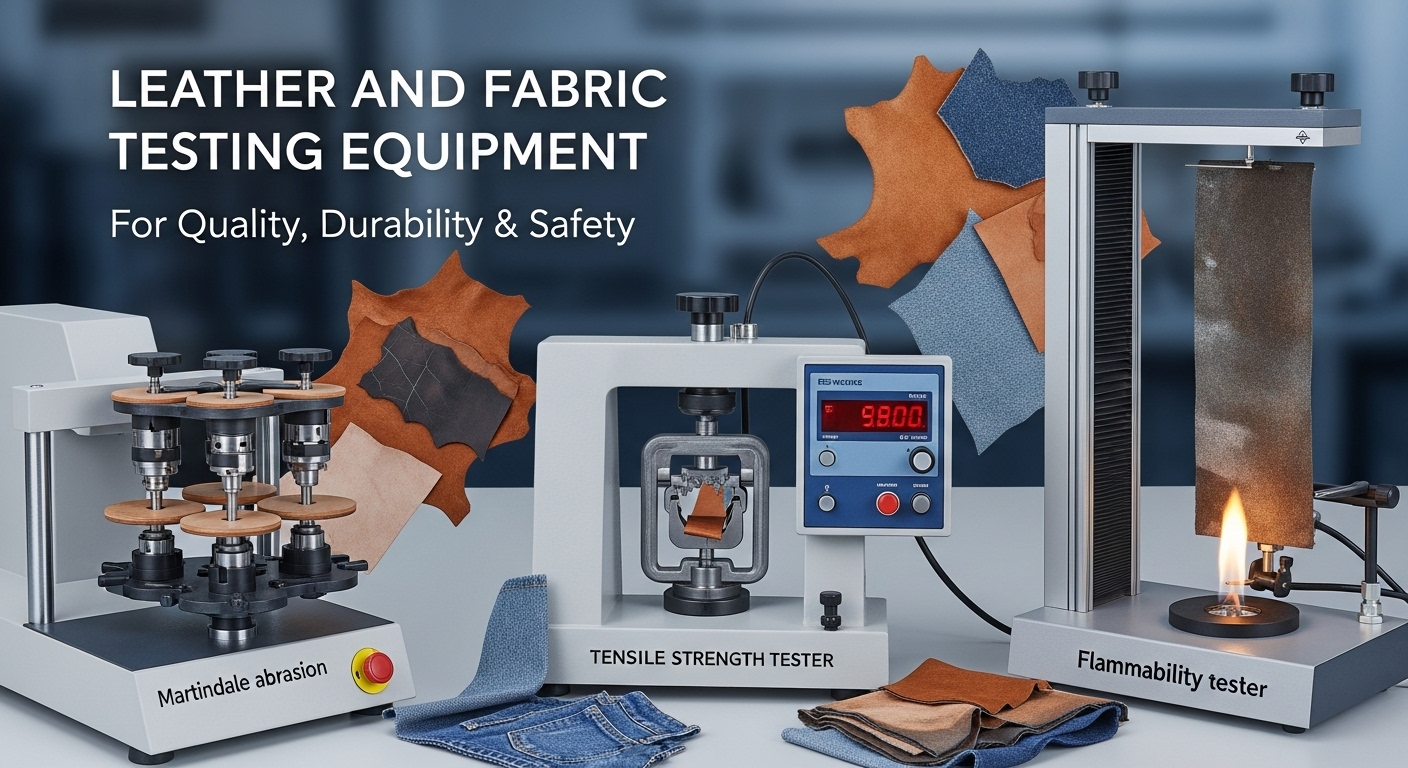
In today’s competitive marketplace, the quality of materials like leather and fabric plays a crucial role in determining the success of products ranging from apparel and footwear to furniture and automotive interiors. As consumers become increasingly quality-conscious and regulatory standards tighten globally, leather and fabric testing equipment has become an indispensable part of the production and quality assurance process in textile and leather-related industries.
This article dives into the types of leather and fabric testing equipment available, their applications, and how they help industries ensure performance, compliance, and customer satisfaction.

Why is Testing Necessary in the Leather and Fabric Industry?
Leather and textile products are subject to constant wear and tear during use. Manufacturers need to assess various properties such as:
- Durability
- Tensile strength
- Color fastness
- Flammability
- Abrasion resistance
- Flex resistance
- Chemical resistance
- Water and air permeability
Testing helps manufacturers to:
- Ensure product longevity and performance
- Comply with international standards (e.g., ISO, ASTM, EN, BIS)
- Improve product design and materials
- Detect manufacturing flaws early
- Meet customer expectations and safety regulations

Types of Leather and Fabric Testing Equipment
-
Tensile Strength Testers
- Purpose: Measures the force required to pull fabric or leather until it breaks.
- Application: Essential for assessing the strength of materials used in upholstery, garments, and automotive interiors.
-
Abrasion Resistance Testers
- Examples: Martindale Abrasion Tester, Taber Abrasion Tester
- Purpose: Simulates wear and tear caused by friction.
- Application: Widely used in upholstery fabrics, automotive seat covers, leather goods, and footwear.
-
Color Fastness Testers
- Types:
- Light Fastness Tester
- Wash Fastness Tester
- Rubbing/Crocking Tester
- Purpose: Evaluates resistance of dyes to fading or running.
- Application: Important for garments, footwear, bags, and automotive interiors where consistent appearance matters.

-
Flexing and Folding Endurance Testers
- Examples: Bally Flexometer
- Purpose: Tests resistance to repeated flexing or folding.
- Application: Key for footwear leather, gloves, and any material subjected to repeated bending.
-
Tear Strength Testers
- Purpose: Measures the resistance of materials to tearing under force.
- Application: Useful in bags, belts, heavy-duty apparel, and protective gear.
-
Water Resistance and Permeability Testers
- Purpose: Determines the level of water absorption or penetration.
- Application: Crucial for outdoor clothing, footwear, and automotive applications.
-
Flammability Testing Equipment
- Purpose: Tests the rate at which fabrics or leather ignite and burn.
- Application: Essential in furniture, transportation, and clothing industries to ensure fire safety compliance.
-
Softness and Hardness Testers
- Purpose: Measures how soft or firm the material is.
- Application: Important for comfort-related products like seating, shoes, and apparel.
-
Thickness Gauges and GSM Testers
- Purpose: Measures the thickness and weight per square meter of the material.
- Application: Ensures consistency in material properties, especially in bulk production.

Applications Across Industries
-
Apparel and Fashion
- Why it matters: Quality assurance for color fastness, fabric strength, and appearance after washing.
- Tests used: Tensile strength, wash fastness, abrasion resistance.
-
Footwear
- Why it matters: Footwear must withstand constant motion and pressure.
- Tests used: Flex resistance (Bally Flex), tear strength, water resistance.
-
Automotive Interiors
- Why it matters: Materials must be durable, fire-resistant, and colorfast under sunlight.
- Tests used: Flammability, UV resistance, abrasion, and tensile strength.
-
Furniture and Upholstery
- Why it matters: Furniture covers face daily friction and must be flame retardant.
- Tests used: Martindale abrasion, color fastness to light, flammability.
-
Bags and Accessories
- Why it matters: These items often carry heavy loads and are exposed to weather.
- Tests used: Tear resistance, water resistance, color fastness.
Compliance and International Standards
Leather and textile products must comply with various international standards. Some key regulatory bodies and standards include:
- ISO (International Organization for Standardization)
- ASTM (American Society for Testing and Materials)
- EN Standards (European Norms)
- AATCC (American Association of Textile Chemists and Colorists)
- BIS (Bureau of Indian Standards)
Testing equipment is often designed to match these standards, ensuring that test results are valid across different markets.


Benefits of Investing in Quality Testing Equipment
- Improved product quality and consistency
- Reduced product returns and complaints
- Increased customer trust and brand reputation
- Compliance with global trade and regulatory requirements
- Competitive advantage in both local and international markets
Conclusion:
In an industry where quality is non-negotiable, leather and fabric testing equipment, soil testing instruments, and material testing instruments act as the first line of defense against defects, regulatory violations, and customer dissatisfaction. Whether you’re a manufacturer, exporter, or quality control professional, investing in reliable, standards-compliant testing instruments from a trusted lab testing instruments supplier in UAE & MENA is a strategic move that pays off in the long run.
As innovation in materials continues to grow, testing methods are also evolving to meet new demands. Staying ahead with cutting-edge testing solutions ensures that your products are not just stylish but safe, durable, and market-ready.

Need Help Selecting the Right Testing Equipment?
Our team of experts is here to guide you through the best testing solutions for your specific applications in leather, textiles, and related industries. Contact us today to learn more or request a free consultation.
FAQs: Leather and Fabric Testing Equipment
-
What is leather and fabric testing equipment?
Leather and fabric testing equipment includes specialized machines and instruments designed to evaluate the physical, chemical, and mechanical properties of textiles and leather. These tests help ensure the quality, durability, and compliance of the materials used in manufacturing.
-
Why is testing important for leather and fabric products?
Testing helps manufacturers assess product performance under various conditions, meet industry standards, prevent defects, ensure safety, and maintain consistent quality, especially for export or regulated markets.
-
What types of tests are commonly performed on leather?
Common leather tests include:
- Tensile strength
- Flex resistance (e.g., Bally flex test)
- Tear strength
- Abrasion resistance
- Color fastness to light, rubbing, and water
- Water permeability
- Flammability testing
-
What tests are typically done on fabric?
Fabric tests may include:
- GSM (grams per square meter)
- Tensile and tear strength
- Color fastness to washing, rubbing, and light
- Pilling resistance
- Flammability testing
- Abrasion resistance (e.g., Martindale method)
-
What is the Martindale Abrasion Tester used for?
The Martindale Abrasion Tester evaluates a fabric or leather’s resistance to wear caused by rubbing or friction. It is commonly used in the upholstery, fashion, and automotive industries.
-
What standards are followed in leather and fabric testing?
Common standards include:
- ISO (International Organization for Standardization)
- ASTM (American Society for Testing and Materials)
- AATCC (American Association of Textile Chemists and Colorists)
- EN (European Norms)
- BIS (Bureau of Indian Standards)
-
Can these tests be done in-house by manufacturers?
Yes. Many manufacturers invest in their own in-house testing labs using leather and fabric testing equipment. This allows for faster quality control, better product development, and reduced outsourcing costs.
-
How often should materials be tested?
Testing frequency depends on the production volume, application, and regulatory requirements. Generally, testing is done during product development, pre-production, and randomly during or after production batches for quality control.
-
Are different testing machines needed for leather and fabric?
While some machines can be used for both, leather and fabric have different properties and often require specialized equipment tailored to their unique characteristics.
-
What is the Bally Flex Test?
The Bally Flex Test measures a leather material’s resistance to repeated flexing or folding. It simulates real-life use in products like shoes and gloves to assess durability.
-
How does color fastness testing work?
Color fastness testing evaluates how well a fabric or leather maintains its color when exposed to washing, rubbing, perspiration, or light. This is done using specific machines like crock meters or light fastness testers.
-
What is GSM testing for fabrics?
GSM stands for grams per square meter. GSM testing measures the weight of the fabric, helping manufacturers ensure consistency in fabric density and thickness.
-
Is testing required for export or compliance purposes?
Yes. Most countries and large retailers require that textiles and leather goods meet certain performance and safety standards. Testing helps ensure compliance with these regulations and reduces the risk of product recalls or bans.
-
What is flammability testing and why is it important?
Flammability testing determines how easily a material catches fire and how it behaves when burning. It is critical for applications like furniture, automotive interiors, and children’s clothing to meet fire safety standards.
-
How do I choose the right testing equipment for my business?
Choosing the right equipment depends on the type of material you work with, the properties you need to test, industry requirements, and your production scale. Consulting with a testing equipment supplier or expert can help determine the best solutions for your needs.
Contact Us:
Need expert guidance on leather and fabric testing equipment?
Visit our International Headquarter at Office 502, 22 King Saadeh Hilal Ahmed Nasser Lootah, Deira, Dubai, UAE.
Call us at +971 50 944 8187 or email info@ngs-technology.com | sales@ngs-technology.com to speak with our specialists.
Get personalized solutions and discover the best testing equipment for your business today.